

|
What
is required for snorkeling? If you are a good swimmer,
you can snorkel at John Pennekamp Coral Reef State Park!
We have rental gear available: prices are $3 a piece for
mask or snorkel (you keep the snorkel) or $4 for fins.
Customers on the snorkel boats, the price is reduced
to $2 a piece for mask or fins, or $3 snorkel (you keep), $7 for the set.
During the winter months (when the water temperature can
drop just below 70), we have "shorty" wetsuits
available, for $6 a piece. For those customers who are
visually impaired, we have prescription masks available
for $5, with lenses running from 1.5 to 7 diopter (for
lower prescriptions, the natural magnification that comes
from looking through water will usually do the vision
correction for you!). All you have to bring is your bathing
suit, towel, and sunscreen.
For
those customers who have never snorkeled before, we recommend
trying the gear out off our beaches first, then heading
out on the boats to see the reefs. Remember, there is
no real coral growth within swimming distance of the Keys,
but the swimming areas of the park are home to several
types of fish and sponges, and are a good, non-threatening
environment to get accustomed to the gear; once you are
ready, the reefs are only a short boat ride offshore!
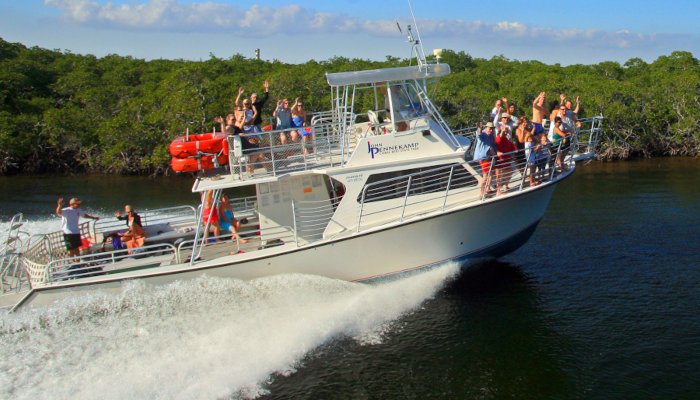
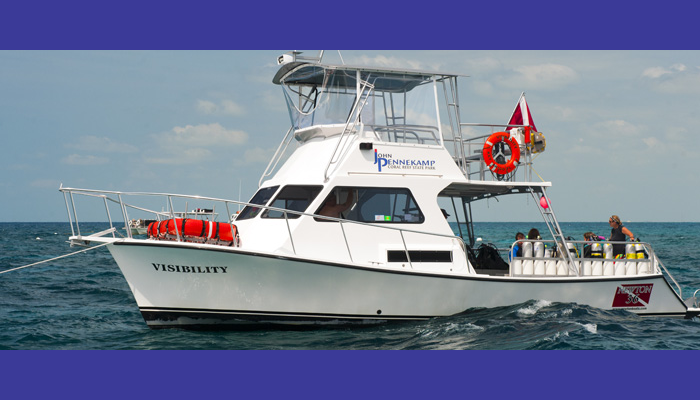
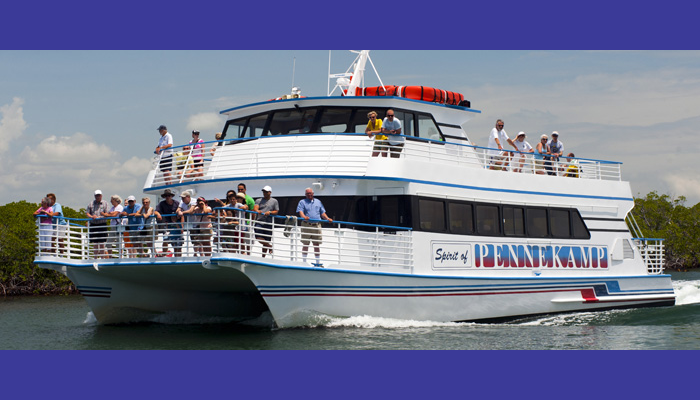
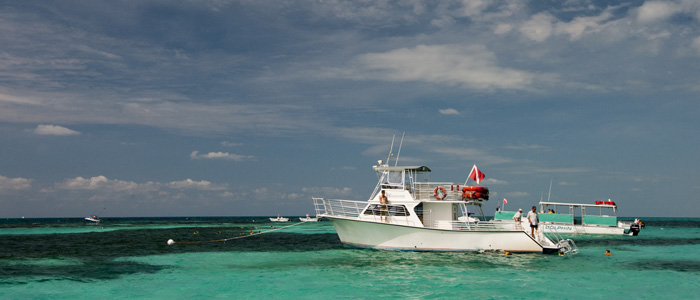
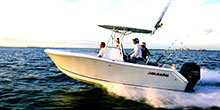
We operate three main snorkel boats in the park, each
of which runs three 21/2-hour trips a day (weather permitting)
at 9:00 am, 12:00 pm, and 3:00 pm; during slow season,
additional times may be available, inquire at the reservation
counter: (305)451-6300. The price for this trip is $28.95 for adults,
$23.95 under 18 (please remember that all younger customers
must be accompanied by an adult!). All prices are for the boat ride only
and do not include gear rental. In-water time is 1-11/2
hours, depending on conditions. All of our boats are safety
inspected and certified as commercial passenger vessels
by the U.S. Coast Guard.
After
arriving at the reef, a class on snorkeling basics and
technique will be given by the mate. This class is optional,
but we HIGHLY recommend it for anyone who hasn’t
been snorkeling in the ocean before (remember, this environment
is very different from a swimming pool), or anyone who
hasn’t been snorkeling in a long time and needs
to brush up a bit. All of our snorkel boat mates are certified
PADI Divemasters and Rescue Divers, and on hand to assist
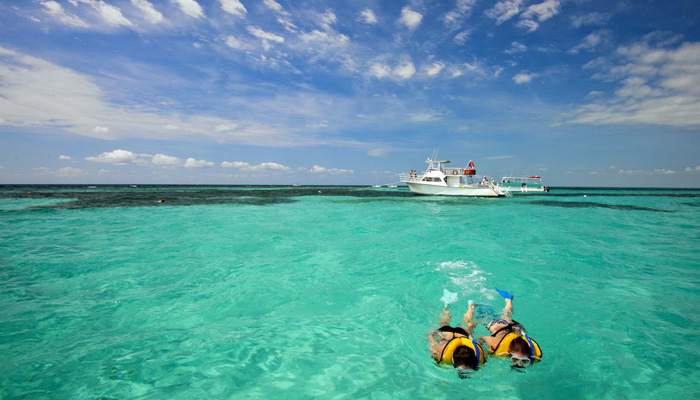
anyone who has trouble in the water. All snorkelers are
also required to wear a yellow snorkel vest (provided
by the boat) anytime they are in the water; these can
be used as buoyancy aides for anyone still getting used
to the gear, and are equipped with emergency inflate valves
for safety.
For
more experienced snorkelers, we do still require the snorkel
vest as a safety measure, but you are not required to
put any air into the vest if you wish to freedive along
the side of the reef. Remember, you may bring your own
gear on board the boat, with a couple exceptions. For
safety reason, we do not allow dive knives or weight belts
on board. Because our reefs are protected sanctuaries,
we do not allow any pole spears, spearguns, or lobster
gear on board. Since all of the Sanctuary Preservation
Areas are also NO TOUCH, we cannot allow dive gloves in
the water. Cameras are WELCOME, and good luck! If you
ask the boat crew, they can often give recommendations
for the best spot to get that breathtaking
reefscape or awe-inspiring macro shot.
The
snorkel boats run to several of our better shallow reefs,
including White Banks Dry Rocks, Grecian Rocks, Banana
Reef, Garret’s Reef / Cannon Patch, and Key Largo
Dry Rocks. These reefs are found from 3 to 5 miles offshore.
The Captains will generally run the boat to the reef where
you will find the best conditions on a given day, but
you are always welcome to make special requests. Depths
on these reefs range from 20 feet to zero (several of
the "Dry Rocks" reefs stick up out of the water
at low tide!), and the captains will point out the best
reef sections upon arrival. Please remember that we cannot
allow anyone to stand up ANYWHERE except on the boat!
Although the area surrounding the reef appears to only
be sand, it is in fact an important nursery area for a
variety of small fish, crustaceans, and even young corals.
Because of this, it is illegal to stand up anywhere around
or on the reef, and no souvenir collection of any sort
is permitted on the trip. We appreciate your help in preserving
this incredibly fragile environment! |